Salad Burnet Native Wildflower Seed
Regular price
£3.49

SANGUISORBA MINOR
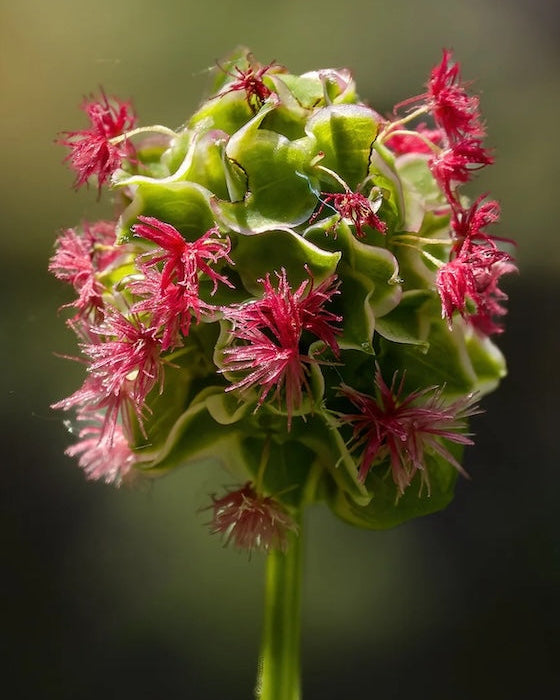
Salad Burnet is the wildflower that wandered into the kitchen and refused to leave. Neat little leaves, unusual flower heads, and a fresh cucumber flavour that makes salads feel like they have suddenly got a personality.
It has been used as a salad herb for centuries, back when people expected plants to be useful as well as good looking. Sensible times, really. The leaves were valued for their clean, cooling taste, and the plant itself is tough, charming, and very happy in dry, sunny ground.
This is one for the edible wild garden. Not flashy. Not fussy. Just quietly delicious, quietly beautiful, and quietly judging supermarket salad bags.
Salad Burnet likes sunny spots, free draining soil, and low competition. It is a tough perennial and a good choice for dry banks, meadow edges, borders, and edible wild gardens.
Rip - Clear weeds, grass, and debris. Rake the soil so you have a loose, open surface.
Scatter - Scatter the seed thinly across the soil.
Sow - Press the seed into the surface, or cover very lightly with soil.
When to sow - For best results sow from August to November. You can also sow from March to May.
Where to sow - Choose a sunny spot with free draining soil and low competition. Salad Burnet is especially good in dry, open, low nutrient ground.
After sowing, keep the soil lightly moist while the seeds get going.
Once you can see green shoots, keep big weeds and thick grass away. Do not feed it. Salad Burnet is happy in poorer soil and does not need pampering.
Once growing well, it is low maintenance. If you want fresh leaves, pick lightly and let the plant keep growing.
Salad Burnet usually flowers from May to August, producing small rounded flower heads above neat green leaves.
It typically grows around 20 to 60 cm tall.
As a perennial, it can return year after year once happy. The leaves are edible, with a fresh cucumber like flavour, and the flowers add quiet meadow charm. Useful, pretty, and far more interesting than another bag of limp spinach.
Yes, Salad Burnet can grow well in pots, especially if you want edible leaves near the kitchen.
Use a medium pot with drainage holes. Fill it with peat free, low nutrient compost mixed with sharp sand or grit to keep it free draining. Avoid rich compost. Wildflowers are not here for theluxury spa treatment.
Scatter the seed thinly, press it in gently, and place the pot somewhere sunny. Keep lightly moist while the seeds get going. Once growing, water when the compost starts to dry out.
We want your seeds to grow. If you follow our sowing instructions, give them a fair chance, and they still do not grow, we’ll put it right.
Eligible customers can choose either a refund for the seeds that did not grow, or replacement seeds of the same value.
For more information on our policy go to our No Grow No Fee page.
SANGUISORBA MINOR
Salad Burnet is the wildflower that wandered into the kitchen and refused to leave. Neat little leaves, unusual flower heads, and a fresh cucumber flavour that makes salads feel like they have suddenly got a personality.
It has been used as a salad herb for centuries, back when people expected plants to be useful as well as good looking. Sensible times, really. The leaves were valued for their clean, cooling taste, and the plant itself is tough, charming, and very happy in dry, sunny ground.
This is one for the edible wild garden. Not flashy. Not fussy. Just quietly delicious, quietly beautiful, and quietly judging supermarket salad bags.
Salad Burnet likes sunny spots, free draining soil, and low competition. It is a tough perennial and a good choice for dry banks, meadow edges, borders, and edible wild gardens.
Rip - Clear weeds, grass, and debris. Rake the soil so you have a loose, open surface.
Scatter - Scatter the seed thinly across the soil.
Sow - Press the seed into the surface, or cover very lightly with soil.
When to sow - For best results sow from August to November. You can also sow from March to May.
Where to sow - Choose a sunny spot with free draining soil and low competition. Salad Burnet is especially good in dry, open, low nutrient ground.
After sowing, keep the soil lightly moist while the seeds get going.
Once you can see green shoots, keep big weeds and thick grass away. Do not feed it. Salad Burnet is happy in poorer soil and does not need pampering.
Once growing well, it is low maintenance. If you want fresh leaves, pick lightly and let the plant keep growing.
Salad Burnet usually flowers from May to August, producing small rounded flower heads above neat green leaves.
It typically grows around 20 to 60 cm tall.
As a perennial, it can return year after year once happy. The leaves are edible, with a fresh cucumber like flavour, and the flowers add quiet meadow charm. Useful, pretty, and far more interesting than another bag of limp spinach.
Yes, Salad Burnet can grow well in pots, especially if you want edible leaves near the kitchen.
Use a medium pot with drainage holes. Fill it with peat free, low nutrient compost mixed with sharp sand or grit to keep it free draining. Avoid rich compost. Wildflowers are not here for theluxury spa treatment.
Scatter the seed thinly, press it in gently, and place the pot somewhere sunny. Keep lightly moist while the seeds get going. Once growing, water when the compost starts to dry out.
We want your seeds to grow. If you follow our sowing instructions, give them a fair chance, and they still do not grow, we’ll put it right.
Eligible customers can choose either a refund for the seeds that did not grow, or replacement seeds of the same value.
For more information on our policy go to our No Grow No Fee page.
Sign up for exclusive offers, original stories, events and more.