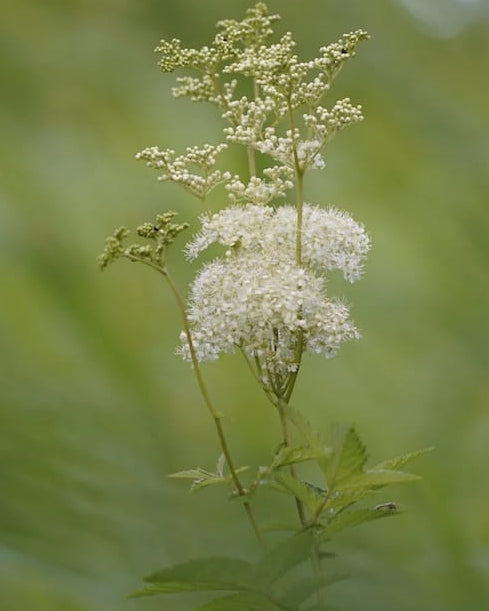
Meadowsweet Native Wildflower Seed
Regular price
£3.95

FILIPENDULA ULMARIA
Meadowsweet, an absolute classic. You may not know this, but when you thought to yourself, "I’d quite like some wildflowers, maybe my own little meadow", you were thinking of Meadowsweet. Tall, white, complex, and quintessentially British.
Nothing makes you think more longingly of warm British summer days than meadowsweet or a film by Richard Curtis. So it will be no surprise to you that Love Actually was supposed to climax with the whole cast dancing in a field of meadowsweet, but in the editing room they all thought it was too much, too British, too perfect.
There’s been evidence of the use of Meadowsweet since the Bronze Age, whether it’s flavouring mead and wine, relieving headaches from said mead or wine or just as a perfume. But who cares when it’s this beautiful.
Meadowsweet likes damp soil, sun or partial shade, and low competition. It is perfect for pond edges, damp borders, stream sides, wetter meadow areas, and wildlife gardens.
Rip - Clear weeds, grass, and debris. Rake the soil so you have a loose, open surface.
Scatter - Scatter the seed thinly across the soil.
Sow - Press the seed gently into the surface so it makes contact with the soil. Do not bury it deeply.
When to sow - For best results sow from August to November. You can also sow from March to May.
Where to sow - Choose a sunny or partly shaded spot with soil that holds moisture. Meadowsweet is not the best choice for very dry, sandy, or baked ground.
After sowing, keep the soil lightly moist while the seeds get going. Meadowsweet likes moisture, so do not let the area dry out completely during long dry spells.
Once you can see green shoots, keep thick grass and big weeds from crowding them out. Do not feed it. Rich soil can encourage grass and make life harder for young wildflowers.
As a perennial, it may spend the first year building leaves and roots before flowering properly later. Give it time, moisture, and a bit of space.
Meadowsweet usually flowers from June to September, producing frothy creamy white flowers with a sweet summer scent.
It typically grows around 60 to 120 cm tall, bringing height, softness, fragrance, and a proper damp meadow feel.
As a perennial, it can return year after year once happy. Bees, hoverflies, and other pollinators visit the flowers, and the whole plant brings that lush, romantic, old countryside feeling. Basically, summer in a white frock.
Yes, Meadowsweet can grow in pots, but it needs a pot that will not dry out too quickly.
Use a medium to large pot with drainage holes. Fill it with peat free compost mixed with some garden soil or low nutrient compost. You can add a little grit for drainage, but do not make it too dry.
Scatter the seed thinly, press it in gently, and place the pot in sun or partial shade. Keep the compost lightly moist, especially in warm weather. Meadowsweet is not here for desert cosplay.
We want your seeds to grow. If you follow our sowing instructions, give them a fair chance, and they still do not grow, we’ll put it right.
Eligible customers can choose either a refund for the seeds that did not grow, or replacement seeds of the same value.
For more information on our policy go to our No Grow No Fee page.
FILIPENDULA ULMARIA
Meadowsweet, an absolute classic. You may not know this, but when you thought to yourself, "I’d quite like some wildflowers, maybe my own little meadow", you were thinking of Meadowsweet. Tall, white, complex, and quintessentially British.
Nothing makes you think more longingly of warm British summer days than meadowsweet or a film by Richard Curtis. So it will be no surprise to you that Love Actually was supposed to climax with the whole cast dancing in a field of meadowsweet, but in the editing room they all thought it was too much, too British, too perfect.
There’s been evidence of the use of Meadowsweet since the Bronze Age, whether it’s flavouring mead and wine, relieving headaches from said mead or wine or just as a perfume. But who cares when it’s this beautiful.
Meadowsweet likes damp soil, sun or partial shade, and low competition. It is perfect for pond edges, damp borders, stream sides, wetter meadow areas, and wildlife gardens.
Rip - Clear weeds, grass, and debris. Rake the soil so you have a loose, open surface.
Scatter - Scatter the seed thinly across the soil.
Sow - Press the seed gently into the surface so it makes contact with the soil. Do not bury it deeply.
When to sow - For best results sow from August to November. You can also sow from March to May.
Where to sow - Choose a sunny or partly shaded spot with soil that holds moisture. Meadowsweet is not the best choice for very dry, sandy, or baked ground.
After sowing, keep the soil lightly moist while the seeds get going. Meadowsweet likes moisture, so do not let the area dry out completely during long dry spells.
Once you can see green shoots, keep thick grass and big weeds from crowding them out. Do not feed it. Rich soil can encourage grass and make life harder for young wildflowers.
As a perennial, it may spend the first year building leaves and roots before flowering properly later. Give it time, moisture, and a bit of space.
Meadowsweet usually flowers from June to September, producing frothy creamy white flowers with a sweet summer scent.
It typically grows around 60 to 120 cm tall, bringing height, softness, fragrance, and a proper damp meadow feel.
As a perennial, it can return year after year once happy. Bees, hoverflies, and other pollinators visit the flowers, and the whole plant brings that lush, romantic, old countryside feeling. Basically, summer in a white frock.
Yes, Meadowsweet can grow in pots, but it needs a pot that will not dry out too quickly.
Use a medium to large pot with drainage holes. Fill it with peat free compost mixed with some garden soil or low nutrient compost. You can add a little grit for drainage, but do not make it too dry.
Scatter the seed thinly, press it in gently, and place the pot in sun or partial shade. Keep the compost lightly moist, especially in warm weather. Meadowsweet is not here for desert cosplay.
We want your seeds to grow. If you follow our sowing instructions, give them a fair chance, and they still do not grow, we’ll put it right.
Eligible customers can choose either a refund for the seeds that did not grow, or replacement seeds of the same value.
For more information on our policy go to our No Grow No Fee page.
Sign up for exclusive offers, original stories, events and more.