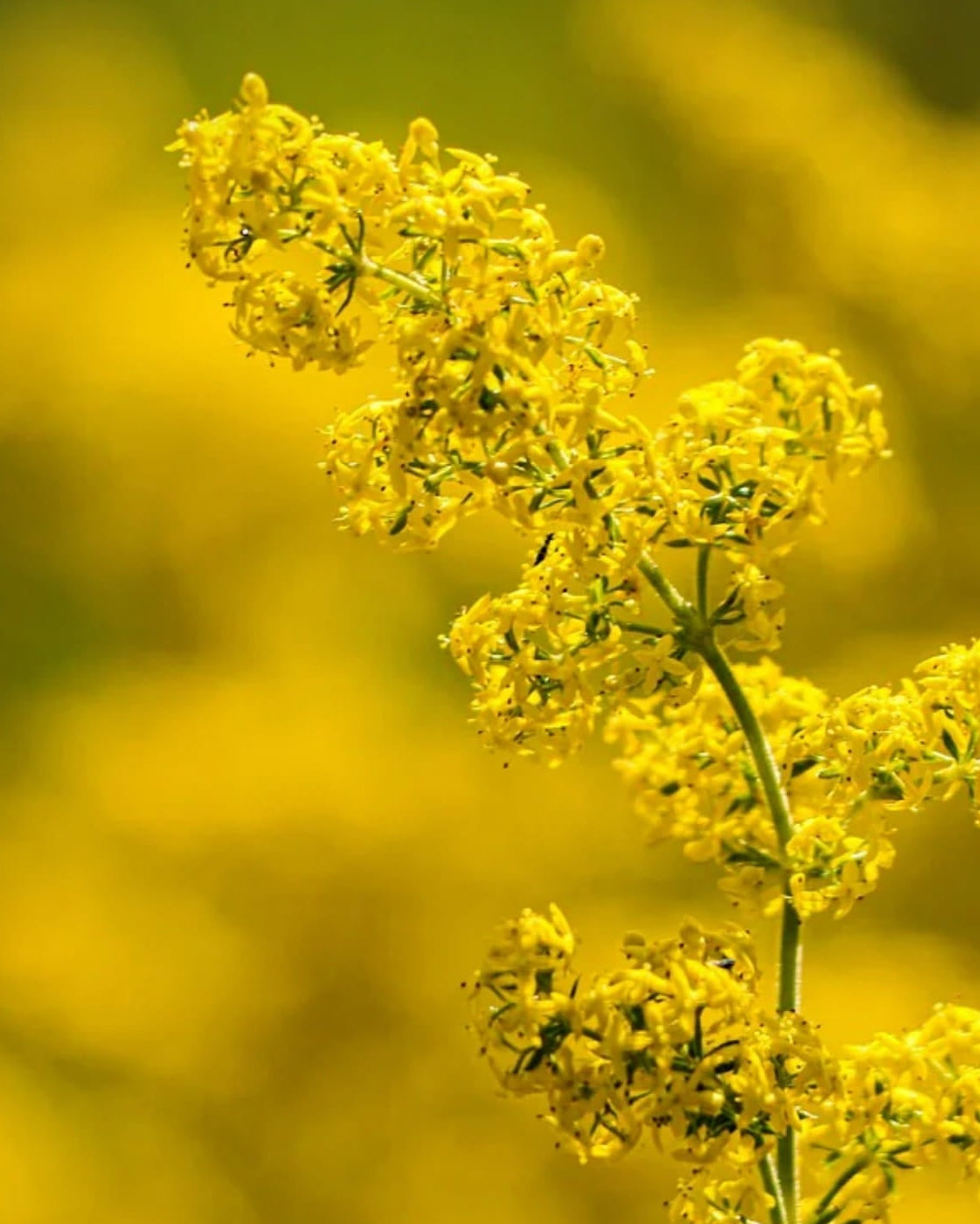
Lady's Bedstraw Native Wildflower Seed
Regular price
£34.99

GALIUM VERUM
Lady’s Bedstraw is sunshine in lace form. Clouds of tiny yellow flowers, a sweet honey scent, and a soft, old meadow charm that makes everything feel warmer, wilder, and slightly more golden.
Historically, it was used for bedding, dye, and even cheesemaking. Yes, cheesemaking. Before the world became all stainless steel and supermarket cheddar, people were out here stuffing mattresses with wildflowers and turning milk into magic. Respect where it is due.
This is a classic meadow plant. Gentle, fragrant, wildlife friendly, and quietly beautiful. Not loud. Not needy. Just golden, useful, and very good at making a garden feel like summer has moved in.
Lady’s Bedstraw likes sunny, open spots and low nutrient soil. It is best for meadow areas, banks, wild lawns, and relaxed natural planting.
Rip - Clear weeds, thick grass, and debris. Rake the soil so the seed can reach the surface.
Scatter - Scatter the seed thinly across the soil.
Sow - Press the seed gently into the surface so it makes contact with the soil. Do not bury it deeply.
When to sow - For best results sow from August to November. You can also sow from March to May.
Where to sow - Choose a sunny spot with free draining, low nutrient soil and low competition. It works beautifully in meadow areas, sunny banks, and wildflower lawns.
After sowing, keep the soil lightly moist while the seeds get going, especially if it is very dry.
Once you can see green shoots, keep thick grass and big weeds from crowding them out. Do not feed it. Lady’s Bedstraw likes poorer soil, and rich soil usually helps grass take over.
It can be slow to build at first, so give it time. Cut meadow areas after flowering and remove the cuttings to keep the soil less rich.
Lady’s Bedstraw usually flowers from June to September, producing clusters of tiny golden yellow flowers with a sweet, warm scent.
It typically grows around 20 to 60 cm tall, weaving beautifully through meadow planting and lower grasses.
As a perennial, it can return year after year once happy. It is good for pollinators, full of old countryside character, and brings a soft golden glow that makes even a small wild patch feel like a proper meadow.
Lady’s Bedstraw can grow in pots, but it is usually better in the ground, especially in meadow style planting.
Use a medium pot with drainage holes. Fill it with peat free, low nutrient compost mixed with sharp sand or grit to keep it free draining.
Scatter the seed thinly, press it in gently, and place the pot somewhere sunny. Keep lightly moist while the seeds get going. Once growing, water when the compost starts to dry out.
We want your seeds to grow. If you follow our sowing instructions, give them a fair chance, and they still do not grow, we’ll put it right.
Eligible customers can choose either a refund for the seeds that did not grow, or replacement seeds of the same value.
For more information on our policy go to our No Grow No Fee page.
GALIUM VERUM
Lady’s Bedstraw is sunshine in lace form. Clouds of tiny yellow flowers, a sweet honey scent, and a soft, old meadow charm that makes everything feel warmer, wilder, and slightly more golden.
Historically, it was used for bedding, dye, and even cheesemaking. Yes, cheesemaking. Before the world became all stainless steel and supermarket cheddar, people were out here stuffing mattresses with wildflowers and turning milk into magic. Respect where it is due.
This is a classic meadow plant. Gentle, fragrant, wildlife friendly, and quietly beautiful. Not loud. Not needy. Just golden, useful, and very good at making a garden feel like summer has moved in.
Lady’s Bedstraw likes sunny, open spots and low nutrient soil. It is best for meadow areas, banks, wild lawns, and relaxed natural planting.
Rip - Clear weeds, thick grass, and debris. Rake the soil so the seed can reach the surface.
Scatter - Scatter the seed thinly across the soil.
Sow - Press the seed gently into the surface so it makes contact with the soil. Do not bury it deeply.
When to sow - For best results sow from August to November. You can also sow from March to May.
Where to sow - Choose a sunny spot with free draining, low nutrient soil and low competition. It works beautifully in meadow areas, sunny banks, and wildflower lawns.
After sowing, keep the soil lightly moist while the seeds get going, especially if it is very dry.
Once you can see green shoots, keep thick grass and big weeds from crowding them out. Do not feed it. Lady’s Bedstraw likes poorer soil, and rich soil usually helps grass take over.
It can be slow to build at first, so give it time. Cut meadow areas after flowering and remove the cuttings to keep the soil less rich.
Lady’s Bedstraw usually flowers from June to September, producing clusters of tiny golden yellow flowers with a sweet, warm scent.
It typically grows around 20 to 60 cm tall, weaving beautifully through meadow planting and lower grasses.
As a perennial, it can return year after year once happy. It is good for pollinators, full of old countryside character, and brings a soft golden glow that makes even a small wild patch feel like a proper meadow.
Lady’s Bedstraw can grow in pots, but it is usually better in the ground, especially in meadow style planting.
Use a medium pot with drainage holes. Fill it with peat free, low nutrient compost mixed with sharp sand or grit to keep it free draining.
Scatter the seed thinly, press it in gently, and place the pot somewhere sunny. Keep lightly moist while the seeds get going. Once growing, water when the compost starts to dry out.
We want your seeds to grow. If you follow our sowing instructions, give them a fair chance, and they still do not grow, we’ll put it right.
Eligible customers can choose either a refund for the seeds that did not grow, or replacement seeds of the same value.
For more information on our policy go to our No Grow No Fee page.
Sign up for exclusive offers, original stories, events and more.