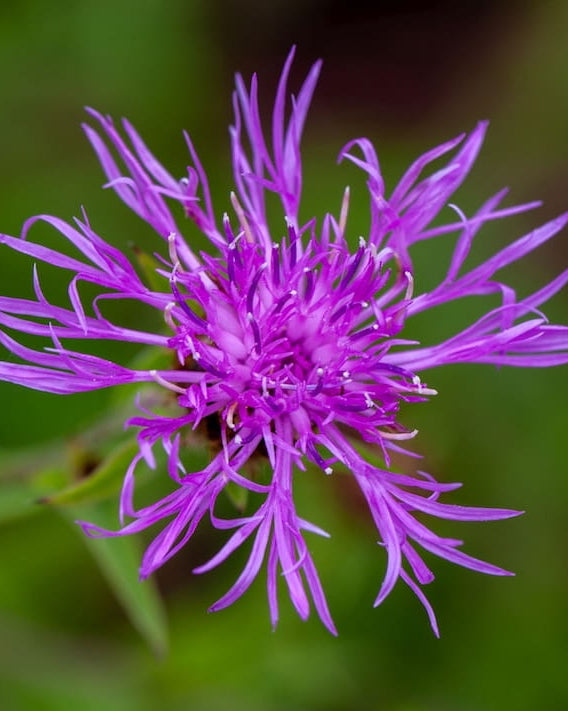
Greater Knapweed Native Wildflower Seed

Regular price £3.99

CENTAUREA SCABIOSA

Greater Knapweed is Common Knapweed’s bigger, bolder cousin. Purple thistle like flowers, strong stems, and the kind of pollinator pulling power that makes bees abandon all dignity.

If Common Knapweed is the village pub, Greater Knapweed is the summer festival main stage. Butterflies drift in like they know someone backstage. Bees get straight to business. Hoverflies hover with purpose. Everyone wants a piece of it.

This is a classic wildflower for sunny meadows, banks, and wildlife gardens. Big, rugged, beautiful, and absolutely not interested in sterile little gardens with no insects and too much decking.

Profile

CENTAUREA SCABIOSA

Greater Knapweed is Common Knapweed’s bigger, bolder cousin. Purple thistle like flowers, strong stems, and the kind of pollinator pulling power that makes bees abandon all dignity.

If Common Knapweed is the village pub, Greater Knapweed is the summer festival main stage. Butterflies drift in like they know someone backstage. Bees get straight to business. Hoverflies hover with purpose. Everyone wants a piece of it.

This is a classic wildflower for sunny meadows, banks, and wildlife gardens. Big, rugged, beautiful, and absolutely not interested in sterile little gardens with no insects and too much decking.

Planting

Greater Knapweed likes full sun, open ground, and free draining soil. It is a perennial and a brilliant choice for meadow areas, sunny banks, borders, and wildlife gardens.

Rip - Clear weeds, grass, and debris. Rake the soil so you have a loose, open surface.

Scatter - Scatter the seed thinly across the soil. Give it space, as Greater Knapweed can grow wide and strong.

Sow - Press the seed gently into the surface so it makes contact. Do not bury it deeply.

When to sow - For best results sow from August to November. You can also sow from March to May.

Where to sow - Choose a sunny spot with free draining soil and low competition. Avoid thick grass, heavy shade, or very wet ground.

Nurture

After sowing, keep the soil lightly moist while the seeds get going, especially in dry weather.

Once you can see green shoots, keep big weeds and thick grass from crowding them out. Do not feed it. Greater Knapweed wants space and light, not rich soil and grass drama.

As a perennial, it may spend its first year building leaves and roots before giving a stronger show later. Give it patience and room.

Results

Greater Knapweed usually flowers from July to September, producing large purple flowers that are excellent for bees, butterflies, and other pollinators.

It typically grows around 50 to 100 cm tall, bringing height, texture, and real meadow presence.

As a perennial, it can return year after year once happy. If youwant a garden that feels alive rather than decorated, Greater Knapweed is a very strong move.

Pots

Yes, Greater Knapweed can grow in pots, but use a good sized container.

Use a medium to large pot, ideally at least 30 cm wide, with drainage holes. Fill it with peat free, low nutrient compost mixed with sharp sand or grit to keep it free draining. Avoid rich compost. Wildflowers are not here for the luxury spa treatment.

Scatter the seed thinly, press it in gently, and place the pot in full sun. Keep lightly moist while the seeds get going. Once growing, water when the compost starts to dry out.

No Grow, No Fee

We want your seeds to grow. If you follow our sowing instructions, give them a fair chance, and they still do not grow, we’ll put it right.

Eligible customers can choose either a refund for the seeds that did not grow, or replacement seeds of the same value.

For more information on our policy go to our No Grow No Fee page.

CUSTOMER REVIEWS