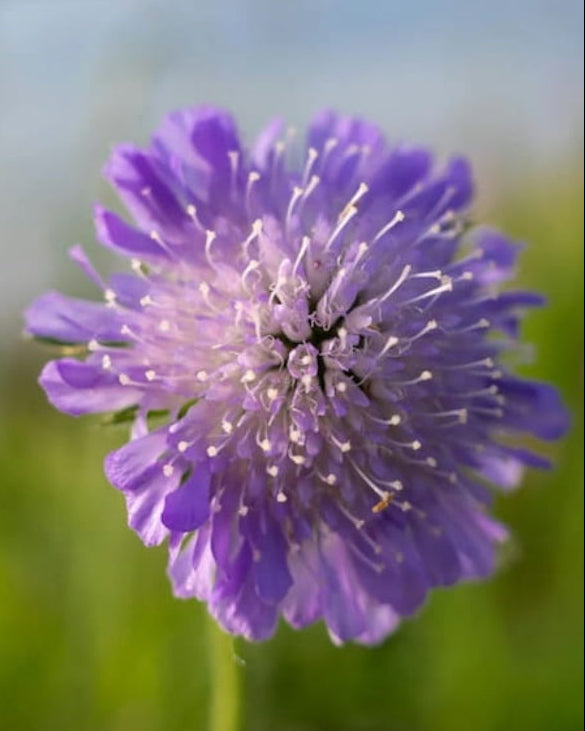
Field Scabious is lavender blue elegance with a wild side. Tall stems, soft pincushion flowers, and the sort of relaxed meadow glamour that makes bees lose all sense of professionalism.
It has an old medicinal history, with plants in the scabious family once used for skin complaints. Thankfully, you no longer need your garden to double as a medieval pharmacy. Now you can just enjoy the flowers, the height, and the constant pollinator attention.
This is a brilliant wildflower for anyone who wants a garden that feels loose, romantic, and alive. Not manicured. Not sterile. More “butterflies have moved in and frankly they have excellent taste.”
Field Scabious likes sunny, open spots and free draining soil. It is a perennial, so give it time and space.
Rip - Clear weeds, grass, and debris. Rake the soil so you have a loose, open surface.
Scatter - Scatter the seed thinly across the soil.
Sow - Press the seed gently into the surface so it makes contact with the soil. Do not bury it deeply.
When to sow - For best results sow from August to November. You can also sow from March to May.
Where to sow - Choose a sunny spot with free draining soil and low competition. Field Scabious is excellent for meadow areas, sunny banks, borders, and wildlife gardens.
After sowing, keep the soil lightly moist while the seeds get going.
Once you can see green shoots, keep thick grass and big weeds away. Do not feed it. Field Scabious prefers lower nutrient soil where grass is less pushy.
As a perennial, it may spend the first year building leaves and roots before flowering strongly later. Give it space, sun, and patience.
Field Scabious usually flowers from July to September, producing soft blue lilac flowers that bees and butterflies love.
It typically grows around 40 to 100 cm tall, bringing height,
movement, and a beautiful meadow feel.
As a perennial, it can return year after year once happy. It is one of those plants that makes a garden feel less like a display and more like an ecosystem. Which is a fancy way of saying, more buzzing, more fluttering, more life.
Yes, Field Scabious can grow in pots, but it is happiest with space for its roots and tall stems.
Use a medium to large pot, ideally at least 30 cm wide, with
drainage holes. Fill it with peat free, low nutrient compost, mixed with sharp sand or grit to keep it free draining.
Scatter the seed thinly, press it in gently, and place the pot somewhere sunny. Keep lightly moist while the seeds get going. Once growing, water when the compost starts to dry out. A sheltered spot can help protect the taller stems from strong wind.
We want your seeds to grow. If you follow our sowing instructions, give them a fair chance, and they still do not grow, we’ll put it right.
Eligible customers can choose either a refund for the seeds that did not grow, or replacement seeds of the same value.
For more information on our policy go to our No Grow No Fee page.
Profile
KNAUTIA ARVENSIS
Field Scabious is lavender blue elegance with a wild side. Tall stems, soft pincushion flowers, and the sort of relaxed meadow glamour that makes bees lose all sense of professionalism.
It has an old medicinal history, with plants in the scabious family once used for skin complaints. Thankfully, you no longer need your garden to double as a medieval pharmacy. Now you can just enjoy the flowers, the height, and the constant pollinator attention.
This is a brilliant wildflower for anyone who wants a garden that feels loose, romantic, and alive. Not manicured. Not sterile. More “butterflies have moved in and frankly they have excellent taste.”
Planting
Field Scabious likes sunny, open spots and free draining soil. It is a perennial, so give it time and space.
Rip - Clear weeds, grass, and debris. Rake the soil so you have a loose, open surface.
Scatter - Scatter the seed thinly across the soil.
Sow - Press the seed gently into the surface so it makes contact with the soil. Do not bury it deeply.
When to sow - For best results sow from August to November. You can also sow from March to May.
Where to sow - Choose a sunny spot with free draining soil and low competition. Field Scabious is excellent for meadow areas, sunny banks, borders, and wildlife gardens.
Nurture
After sowing, keep the soil lightly moist while the seeds get going.
Once you can see green shoots, keep thick grass and big weeds away. Do not feed it. Field Scabious prefers lower nutrient soil where grass is less pushy.
As a perennial, it may spend the first year building leaves and roots before flowering strongly later. Give it space, sun, and patience.
Results
Field Scabious usually flowers from July to September, producing soft blue lilac flowers that bees and butterflies love.
It typically grows around 40 to 100 cm tall, bringing height,
movement, and a beautiful meadow feel.
As a perennial, it can return year after year once happy. It is one of those plants that makes a garden feel less like a display and more like an ecosystem. Which is a fancy way of saying, more buzzing, more fluttering, more life.
Pots
Yes, Field Scabious can grow in pots, but it is happiest with space for its roots and tall stems.
Use a medium to large pot, ideally at least 30 cm wide, with
drainage holes. Fill it with peat free, low nutrient compost, mixed with sharp sand or grit to keep it free draining.
Scatter the seed thinly, press it in gently, and place the pot somewhere sunny. Keep lightly moist while the seeds get going. Once growing, water when the compost starts to dry out. A sheltered spot can help protect the taller stems from strong wind.
No Grow, No Fee
We want your seeds to grow. If you follow our sowing instructions, give them a fair chance, and they still do not grow, we’ll put it right.
Eligible customers can choose either a refund for the seeds that did not grow, or replacement seeds of the same value.
For more information on our policy go to our No Grow No Fee page.