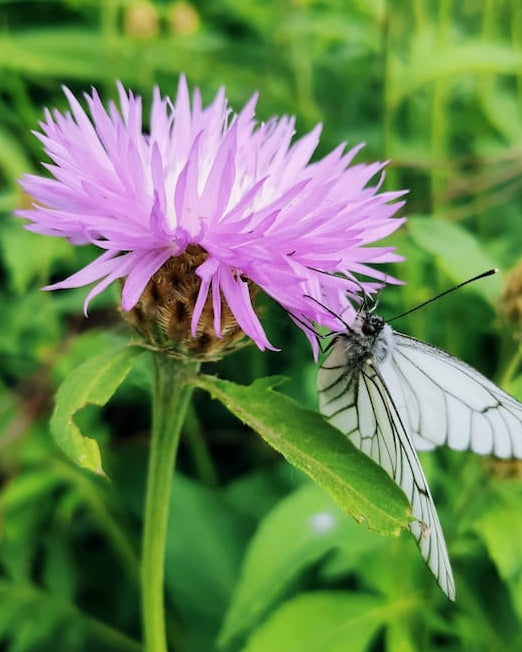
Common Knapweed is a pollinator pub, and everyone is invited. Bees, butterflies, hoverflies, beetles, the lot. If your garden needs more life, this is one of the finest native wildflowers you can grow.
With thistle like purple flower heads and strong meadow energy, Knapweed has that slightly rugged look that makes a garden feel properly wild. Not messy. Alive. There is a difference, and Knapweed understands it perfectly.
It is sometimes called Hardheads, which sounds like a pub, a folk band, or a gang of extremely determined bees. Either way, we are on board.
Common Knapweed likes sun, open ground, and low competition. It is a tough perennial and a classic meadow species.
Rip - Clear weeds, grass, and debris. Rake the soil so you have a loose, open surface.
Scatter - Scatter the seed thinly across the soil.
Sow - Press the seed gently into the surface so it makes contact with the soil. Do not bury it deeply.
When to sow - For best results sow from August to November. You can also sow from March to May.
Where to sow - Choose a sunny spot with free draining soil and low competition. Common Knapweed is excellent for meadows, borders, banks, and wildlife gardens.
After sowing, keep the soil lightly moist while the seeds get going, especially in dry weather.
Once you can see green shoots, keep thick grass and big weeds from taking over. Knapweed does not need feeding. Poorer soil is usually better for wildflowers because it keeps grass less aggressive.
As a perennial, it may focus on leaves and roots in the first year before flowering more strongly later. This is normal. It is not being lazy, it is building the empire underground.
Common Knapweed usually flowers from July to September, producing purple thistle like flowers that are outstanding for bees, butterflies, and other pollinators.
It typically grows around 30 to 80 cm tall, bringing height, texture, and a proper meadow feel.
As a perennial, it can return year after year once happy. If you want a garden that buzzes, flutters, and feels a little less sterile, Knapweed is a very strong move.
Yes, Common Knapweed can grow in pots, though it is happiest in the ground where pollinators can properly descend on it.
Use a medium to large pot, ideally at least 30 cm wide, with
drainage holes. Fill it with peat free, low nutrient compost, mixed with sharp sand or grit to keep it open and free draining.
Scatter the seed thinly, press it in gently, and place the pot somewhere sunny. Keep lightly moist while the seeds get going. Once growing, water when the compost starts to dry out.
We want your seeds to grow. If you follow our sowing instructions, give them a fair chance, and they still do not grow, we’ll put it right.
Eligible customers can choose either a refund for the seeds that did not grow, or replacement seeds of the same value.
For more information on our policy go to our No Grow No Fee page.
Profile
CENTAUREA NIGRA
Common Knapweed is a pollinator pub, and everyone is invited. Bees, butterflies, hoverflies, beetles, the lot. If your garden needs more life, this is one of the finest native wildflowers you can grow.
With thistle like purple flower heads and strong meadow energy, Knapweed has that slightly rugged look that makes a garden feel properly wild. Not messy. Alive. There is a difference, and Knapweed understands it perfectly.
It is sometimes called Hardheads, which sounds like a pub, a folk band, or a gang of extremely determined bees. Either way, we are on board.
Planting
Common Knapweed likes sun, open ground, and low competition. It is a tough perennial and a classic meadow species.
Rip - Clear weeds, grass, and debris. Rake the soil so you have a loose, open surface.
Scatter - Scatter the seed thinly across the soil.
Sow - Press the seed gently into the surface so it makes contact with the soil. Do not bury it deeply.
When to sow - For best results sow from August to November. You can also sow from March to May.
Where to sow - Choose a sunny spot with free draining soil and low competition. Common Knapweed is excellent for meadows, borders, banks, and wildlife gardens.
Nurture
After sowing, keep the soil lightly moist while the seeds get going, especially in dry weather.
Once you can see green shoots, keep thick grass and big weeds from taking over. Knapweed does not need feeding. Poorer soil is usually better for wildflowers because it keeps grass less aggressive.
As a perennial, it may focus on leaves and roots in the first year before flowering more strongly later. This is normal. It is not being lazy, it is building the empire underground.
Results
Common Knapweed usually flowers from July to September, producing purple thistle like flowers that are outstanding for bees, butterflies, and other pollinators.
It typically grows around 30 to 80 cm tall, bringing height, texture, and a proper meadow feel.
As a perennial, it can return year after year once happy. If you want a garden that buzzes, flutters, and feels a little less sterile, Knapweed is a very strong move.
Pots
Yes, Common Knapweed can grow in pots, though it is happiest in the ground where pollinators can properly descend on it.
Use a medium to large pot, ideally at least 30 cm wide, with
drainage holes. Fill it with peat free, low nutrient compost, mixed with sharp sand or grit to keep it open and free draining.
Scatter the seed thinly, press it in gently, and place the pot somewhere sunny. Keep lightly moist while the seeds get going. Once growing, water when the compost starts to dry out.
No Grow, No Fee
We want your seeds to grow. If you follow our sowing instructions, give them a fair chance, and they still do not grow, we’ll put it right.
Eligible customers can choose either a refund for the seeds that did not grow, or replacement seeds of the same value.
For more information on our policy go to our No Grow No Fee page.