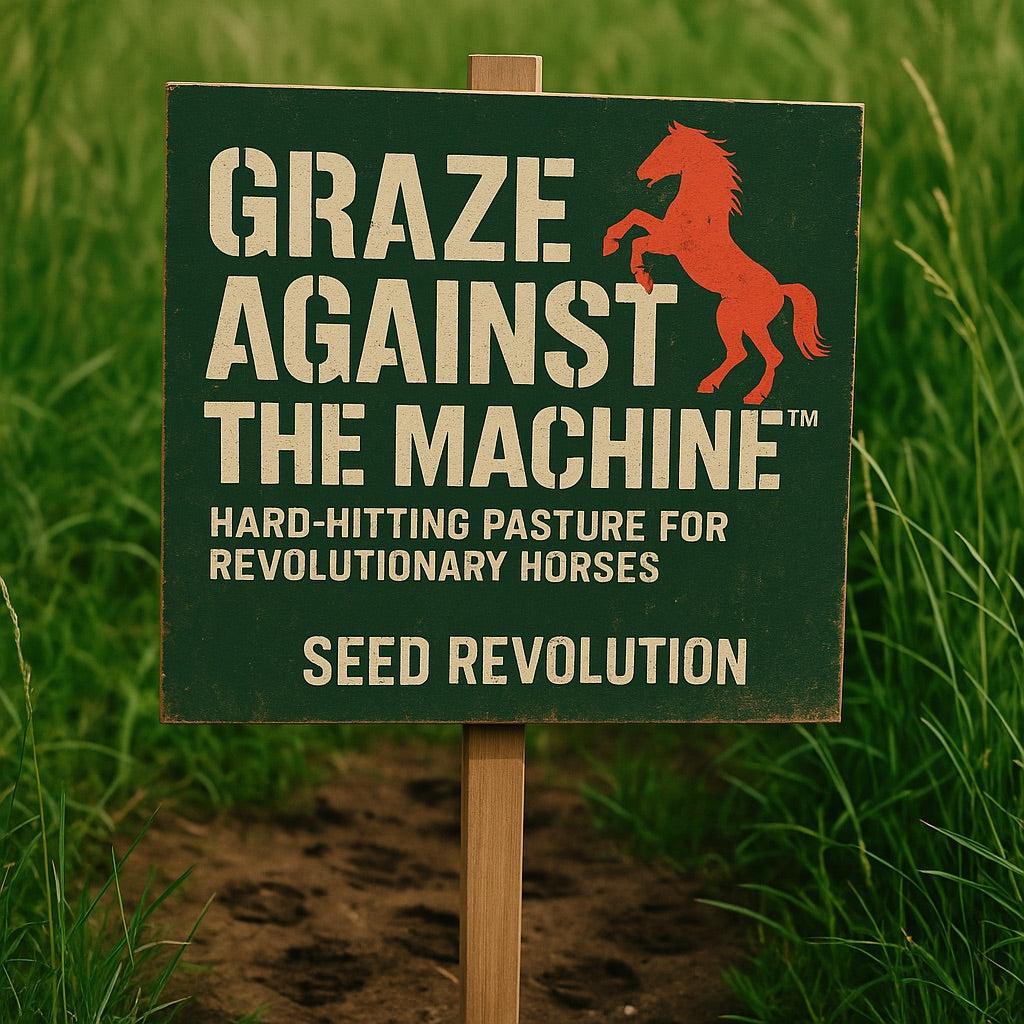
Graze Against the Machine — Horse Paddock Grass Seed Mix
Regular price
£57.99
Hard hitting pasture for revolutionary horses.
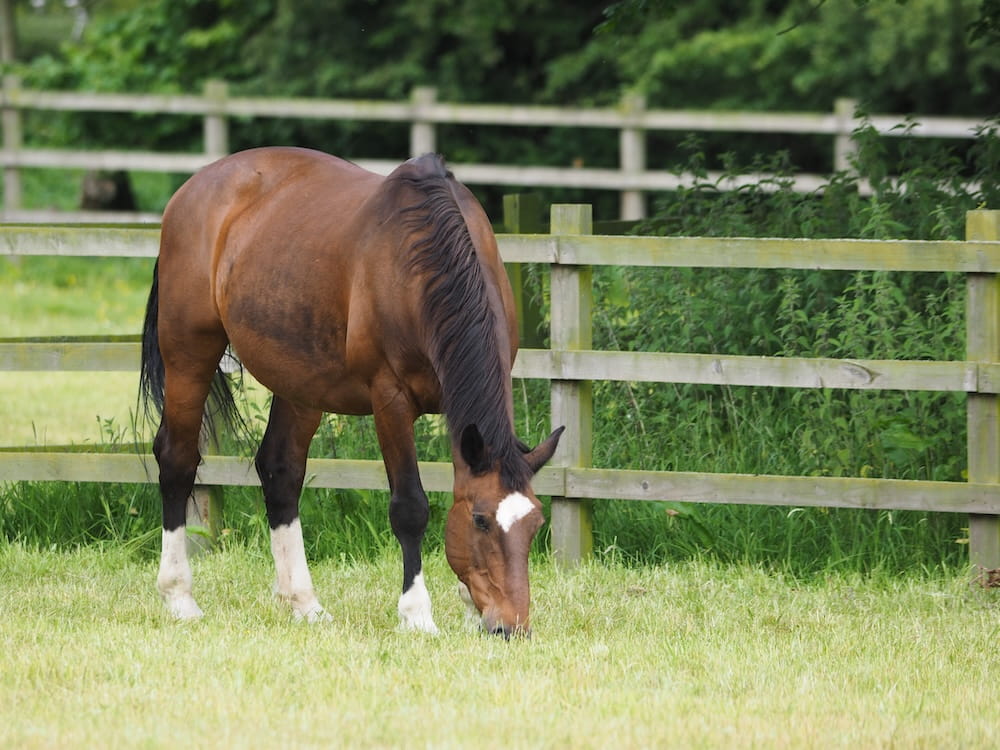
Graze Against the Machine is a durable horse paddock mixture designed for areas that experience regular grazing, hoof traffic and general equine disruption.
Early perennial ryegrass supports fast establishment and recovery. Strong creeping red fescue helps form dense ground cover, while Timothy and meadow fescue add palatable grazing and longer term pasture structure.
It is suitable for creating a new paddock or repairing an existing field that has started to resemble a four legged protest zone.
Good paddock management is still essential. No grass mixture can withstand continuous grazing, severe poaching or heavy traffic without rest and recovery.
Best sowing time: March to May, or August to September
Sowing rate: 10 kg per acre
Sowing method: Broadcast or drill shallowly
Sowing depth: No deeper than approximately 1 cm
For a new paddock, remove persistent weeds, cultivate the soil and create a fine, firm seedbed. Sow evenly, then roll or firm the ground to give the seed good soil contact.
For overseeding, graze or cut the existing grass short, remove excess dead material and open the surface with a harrow or suitable overseeding equipment before sowing.
The sowing rate is a guide. Ground condition, existing grass cover and the amount of repair required may affect how much seed is needed.
Paddock tip: Dividing the field into smaller sections makes rotational grazing easier and gives worn areas a chance to recover.
Keep horses off newly sown ground while the grass establishes. The plants should be well rooted and resistant to being pulled from the soil before grazing begins.
A first light cut can encourage the young grass to thicken, provided the ground is firm enough for machinery.
Introduce horses gradually and avoid grazing the new sward too closely. Rotate grazing where possible, rest worn sections and repair gateways before they turn back into mud.
Remove droppings regularly and manage weeds using an appropriate paddock management plan.
Germination can begin within 7 to 21 days in warm, moist conditions. Full paddock establishment takes considerably longer.
The mixture is designed to create dense, resilient grazing with good recovery and useful ground cover. Actual performance will depend on soil condition, drainage, weather, stocking level and how much recovery time the paddock receives.
Graze strong. Trample responsibly. Viva la paddock.
We want your seeds to grow. If you follow our sowing instructions, give them a fair chance, and they still do not grow, we’ll put it right.
Eligible customers can choose either a refund for the seeds that did not grow, or replacement seeds of the same value.
For more information on our policy go to our No Grow No Fee page.
Hard hitting pasture for revolutionary horses.
Graze Against the Machine is a durable horse paddock mixture designed for areas that experience regular grazing, hoof traffic and general equine disruption.
Early perennial ryegrass supports fast establishment and recovery. Strong creeping red fescue helps form dense ground cover, while Timothy and meadow fescue add palatable grazing and longer term pasture structure.
It is suitable for creating a new paddock or repairing an existing field that has started to resemble a four legged protest zone.
Good paddock management is still essential. No grass mixture can withstand continuous grazing, severe poaching or heavy traffic without rest and recovery.
Best sowing time: March to May, or August to September
Sowing rate: 10 kg per acre
Sowing method: Broadcast or drill shallowly
Sowing depth: No deeper than approximately 1 cm
For a new paddock, remove persistent weeds, cultivate the soil and create a fine, firm seedbed. Sow evenly, then roll or firm the ground to give the seed good soil contact.
For overseeding, graze or cut the existing grass short, remove excess dead material and open the surface with a harrow or suitable overseeding equipment before sowing.
The sowing rate is a guide. Ground condition, existing grass cover and the amount of repair required may affect how much seed is needed.
Paddock tip: Dividing the field into smaller sections makes rotational grazing easier and gives worn areas a chance to recover.
Keep horses off newly sown ground while the grass establishes. The plants should be well rooted and resistant to being pulled from the soil before grazing begins.
A first light cut can encourage the young grass to thicken, provided the ground is firm enough for machinery.
Introduce horses gradually and avoid grazing the new sward too closely. Rotate grazing where possible, rest worn sections and repair gateways before they turn back into mud.
Remove droppings regularly and manage weeds using an appropriate paddock management plan.
Germination can begin within 7 to 21 days in warm, moist conditions. Full paddock establishment takes considerably longer.
The mixture is designed to create dense, resilient grazing with good recovery and useful ground cover. Actual performance will depend on soil condition, drainage, weather, stocking level and how much recovery time the paddock receives.
Graze strong. Trample responsibly. Viva la paddock.
We want your seeds to grow. If you follow our sowing instructions, give them a fair chance, and they still do not grow, we’ll put it right.
Eligible customers can choose either a refund for the seeds that did not grow, or replacement seeds of the same value.
For more information on our policy go to our No Grow No Fee page.
Sign up for exclusive offers, original stories, events and more.