Wild Teasel Native Wildflower Seed
Regular price
£3.95

DIPSACUS FULLONUM
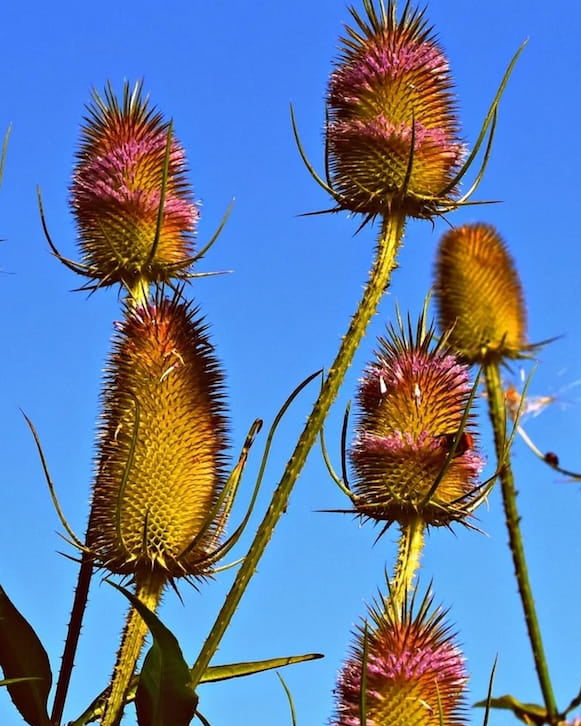
Teasel is not a flower, it is a whole architectural decision. Tall, spiky, dramatic, and absolutely convinced your garden needsmore attitude.
In summer, bees and butterflies visit the purple rings of flowers that move around the spiny heads like tiny floral halos. Later, goldfinches arrive for the seeds, looking very pleased with themselves, as if they have found the private members’ club of the bird world.
Historically, teasel heads were used in cloth making to raise the nap on wool. So yes, this plant has dressed people, fed birds, entertained bees, and looked magnificent doing it. A gothic tower block for wildlife.
Teasel likes sunny or partly shaded spots, open ground, and low competition. It is best for larger borders, wild corners, meadow edges, and wildlife gardens.
Rip - Clear weeds, grass, and debris. Rake the soil so you have a loose, open surface.
Scatter - Scatter the seed thinly across the soil. Teasel gets big, so give it space.
Sow - Press the seed gently into the surface, or cover very lightly with soil.
When to sow - For best results sow from May to August for flowers the following year. You can also sow from August to November.
Where to sow - Choose a sunny or partly shaded spot with enough space for tall plants. Avoid tiny beds or places where the spiky stems will be in the way.
After sowing, keep the soil lightly moist while the seeds get going.
Once you can see green shoots, keep big weeds and thick grass away. Teasel does not need feeding and usually becomes very tough once growing.
Teasel is biennial. It usually grows leaves in the first year, then flowers in the second. After flowering, leave the seed heads standing if you want to feed birds and keep the winter structure.
Teasel usually flowers from July to August in its second year, producing tall spiky heads with purple flowers that bees and butterflies visit.
It typically grows around 100 to 200 cm tall, so it brings serious height and structure.
As a biennial, it grows leaves in year one, flowers in year two, then sets seed. Leave the seed heads standing and goldfinches may visit in autumn and winter. Big, bold, spiky, and extremely good for wildlife.
Teasel is not ideal for pots because it gets tall, deep rooted, and spiky.
If you do try it, use a large, deep, heavy pot with drainage holes, and place it somewhere sheltered from strong wind. Fill it with peat free, low nutrient compost mixed with sharp sand or grit.
For most people, Teasel is better in the ground, where it has space to become the dramatic wildlife tower it clearly wants to be.
We want your seeds to grow. If you follow our sowing instructions, give them a fair chance, and they still do not grow, we’ll put it right.
Eligible customers can choose either a refund for the seeds that did not grow, or replacement seeds of the same value.
For more information on our policy go to our No Grow No Fee page.
DIPSACUS FULLONUM
Teasel is not a flower, it is a whole architectural decision. Tall, spiky, dramatic, and absolutely convinced your garden needsmore attitude.
In summer, bees and butterflies visit the purple rings of flowers that move around the spiny heads like tiny floral halos. Later, goldfinches arrive for the seeds, looking very pleased with themselves, as if they have found the private members’ club of the bird world.
Historically, teasel heads were used in cloth making to raise the nap on wool. So yes, this plant has dressed people, fed birds, entertained bees, and looked magnificent doing it. A gothic tower block for wildlife.
Teasel likes sunny or partly shaded spots, open ground, and low competition. It is best for larger borders, wild corners, meadow edges, and wildlife gardens.
Rip - Clear weeds, grass, and debris. Rake the soil so you have a loose, open surface.
Scatter - Scatter the seed thinly across the soil. Teasel gets big, so give it space.
Sow - Press the seed gently into the surface, or cover very lightly with soil.
When to sow - For best results sow from May to August for flowers the following year. You can also sow from August to November.
Where to sow - Choose a sunny or partly shaded spot with enough space for tall plants. Avoid tiny beds or places where the spiky stems will be in the way.
After sowing, keep the soil lightly moist while the seeds get going.
Once you can see green shoots, keep big weeds and thick grass away. Teasel does not need feeding and usually becomes very tough once growing.
Teasel is biennial. It usually grows leaves in the first year, then flowers in the second. After flowering, leave the seed heads standing if you want to feed birds and keep the winter structure.
Teasel usually flowers from July to August in its second year, producing tall spiky heads with purple flowers that bees and butterflies visit.
It typically grows around 100 to 200 cm tall, so it brings serious height and structure.
As a biennial, it grows leaves in year one, flowers in year two, then sets seed. Leave the seed heads standing and goldfinches may visit in autumn and winter. Big, bold, spiky, and extremely good for wildlife.
Teasel is not ideal for pots because it gets tall, deep rooted, and spiky.
If you do try it, use a large, deep, heavy pot with drainage holes, and place it somewhere sheltered from strong wind. Fill it with peat free, low nutrient compost mixed with sharp sand or grit.
For most people, Teasel is better in the ground, where it has space to become the dramatic wildlife tower it clearly wants to be.
We want your seeds to grow. If you follow our sowing instructions, give them a fair chance, and they still do not grow, we’ll put it right.
Eligible customers can choose either a refund for the seeds that did not grow, or replacement seeds of the same value.
For more information on our policy go to our No Grow No Fee page.
Sign up for exclusive offers, original stories, events and more.